-
×
 Nexus 32mmØ Self-Adhesive Electrodes
1 × R44.85
Nexus 32mmØ Self-Adhesive Electrodes
1 × R44.85
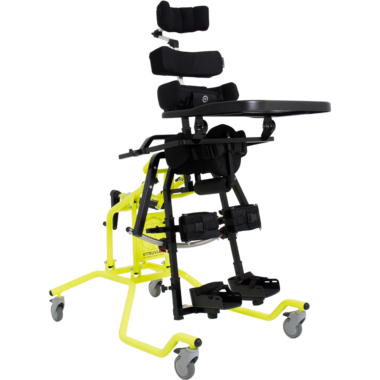
Vitruvian Static Standing Frame – Precision Standing for Clinical Rehabilitation
The Vitruvian Static Standing Frame is a premium medical rehabilitation device engineered to support for individuals who are unable to stand independently. Designed for safety, comfort, and adaptability, the Vitruvian enables both front and rear upright positioning, allowing therapists to tailor positioning across different stages of rehabilitation and daily functional use.
Its advanced modular design offers extensive adjustment options to ensure an optimal anatomical fit for each user. A fully integrated system of adjustable pads, belts, and supports stabilises the head, torso, pelvis, knees, and feet, effectively preventing uncontrolled or compensatory movements during standing therapy.
The Vitruvian allows lower limb abduction from 0° to 50°, supporting proper posture, reducing spasticity, and helping to prevent contractures and deformities. Precision-adjustable knee pads (depth, height, width, and abduction) ensure accurate lower-limb alignment, even during extended therapy sessions.
An adjustable therapy table—with height, depth, and tilt control—provides upper-limb support and functions as a practical surface for therapeutic exercises, learning activities, and play. Smooth angle adjustment enables gradual, safe verticalisation, while the mobile base with lockable castors ensures stability and effortless repositioning within clinical settings.
By promoting correct posture and balance control, the Vitruvian Static Standing Frame supports circulatory, respiratory, and digestive function, enhancing overall health outcomes and encouraging active engagement in rehabilitation and everyday activities.
🔹 Indications
-
Cerebral palsy (all types and forms)
-
Demyelinating diseases (e.g. MS, ALS)
-
Muscle diseases with paresis or paralysis (e.g. dystrophy, myasthenia gravis, polymyositis)
-
Degenerative and metabolic nervous system diseases
-
Brain and spinal cord injuries with limb paresis or coordination impairments
-
Genetic syndromes with limb paresis
-
Degenerative and rheumatic joint diseases
-
Post-traumatic brain or spinal cord injuries, including quadriplegia
-
Meningocele
🔹 Contraindications
Observation required:
Monitor the user during standing. Discontinue therapy if paleness, sweating, fainting, joint overload, or abnormal body deformation occurs.
Relative contraindications:
-
Resting hypertension >200/110 mmHg
-
Pulmonary hypertension
-
Cardiac rhythm disorders
-
Unstable asthma or metabolic conditions
-
Moderate heart valve disease
-
Incomplete fracture healing (unless medically approved)
-
Pain from dislocation, excessive stretch, or pressure
Absolute contraindications:
-
Critical medical condition
-
Conditions preventing weight-bearing (e.g. healing fractures, severe osteoporosis)
-
Postoperative joint load restrictions
-
Severe hip, knee, or ankle contractures causing unsafe pressure or stretch
🔹 Technical Information
-
Indicative user height: 110 – 140 cm
-
Maximum user weight: 50 kg
Related products
Out of stock
Patient Assistive
Price range: R29,670.00 through R35,707.50 inc. VAT
This product has multiple variants. The options may be chosen on the product page
Sale!

Consumables
Price range: R431.25 through R886.08 inc. VAT
This product has multiple variants. The options may be chosen on the product page