
-
×
 Buck Neurological Hammer
1 × R165.31
Buck Neurological Hammer
1 × R165.31
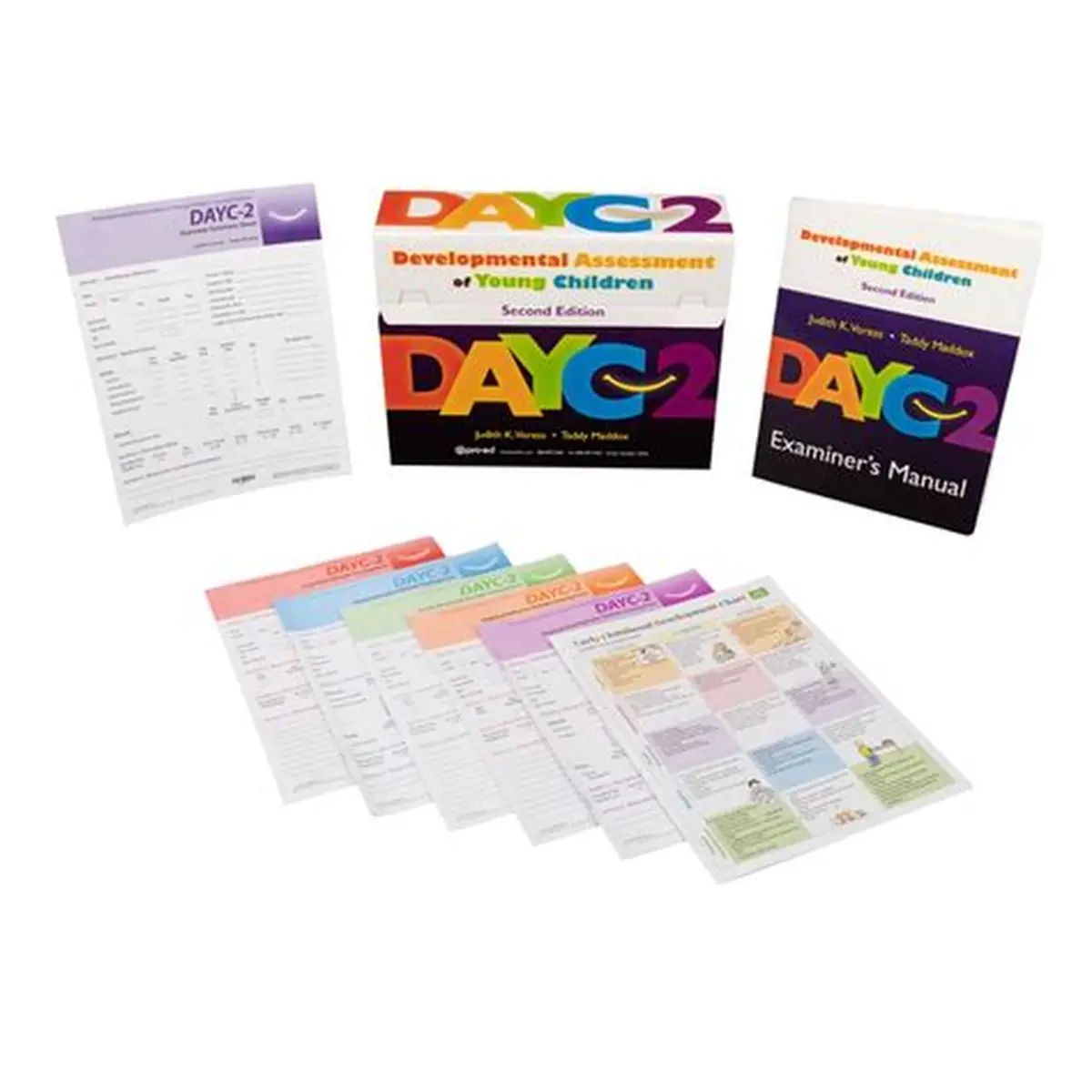


Developmental Assessment of Young Children | Second Edition – Comprehensive Early Childhood Developmental Assessment Tool
Evaluate Key Developmental Domains in Children from Birth to 5 Years
The Developmental Assessment of Young Children – Second Edition (DAYC-2) is a widely trusted, standardized tool designed to identify developmental delays in children from birth through 5 years of age.
The DAYC-2 assesses five essential developmental domains that align with the IDEA-mandated early childhood areas for evaluation and intervention:
-
Cognition
-
Communication (including Receptive & Expressive subdomains)
-
Social-Emotional Development
-
Physical Development (including Gross & Fine Motor subdomains)
-
Adaptive Behavior
This flexible assessment can be administered through direct testing, caregiver interviews, or natural observation, providing a comprehensive picture of a child’s strengths and developmental needs.
Age Range:
Birth – 5 years
Administration:
-
Individual assessment
-
Completion time: 10–20 minutes per domain
-
Qualification level: B
Key Benefits:
-
Provides comprehensive developmental insights across five core domains
-
Flexible administration — assess one or all domains as needed
-
Accurate, research-based norms from a national sample of 1,832 children
-
Includes subdomain scoring for Receptive/Expressive Language and Gross/Fine Motor Skills
-
Offers standard scores, percentile ranks, and age equivalents
-
Backed by validity, sensitivity, and specificity studies
-
Updated with simplified ceiling rules and clearer item wording for ease of use
-
Ideal for early intervention programs, preschools, and pediatric therapy environments
Test Components:
-
Examiner’s Manual (Print)
-
25 Adaptive Behavior Forms
-
25 Cognitive Forms
-
25 Communication Forms
-
25 Physical Development Forms
-
25 Social-Emotional Development Scoring Forms
-
25 Examiner Summary Sheets
-
25 Early Childhood Development Chart Mini Posters
-
Sturdy Storage Box
Publication Details:
-
Edition: 2nd (2012)
-
Norm Data Collected: 2009–2011
-
Standard Scores, Percentile Ranks, and Age Equivalents included
Authors:
Judith K. Voress, PhD & Taddy Maddox, PhD